Basque Cheesecake Recipe
Introduction
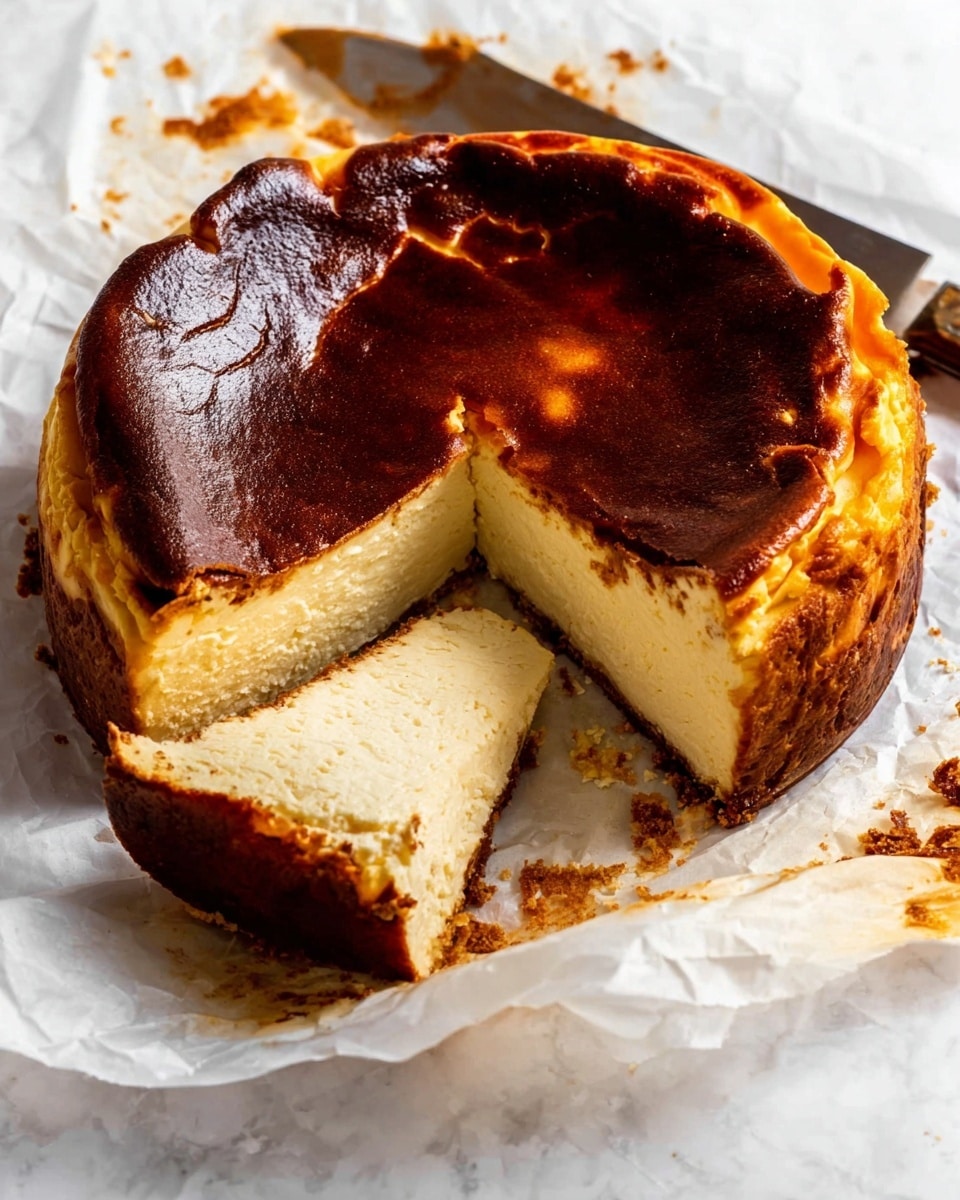
Basque cheesecake is a rich and creamy dessert known for its deeply caramelized top and custardy interior. This no-fuss recipe delivers a rustic, burnt-topped cake that’s surprisingly easy to make at home. Perfect for cheesecake lovers seeking a new twist on a classic.
Ingredients
- 750 g / 1.5 lb cream cheese blocks, room temperature (I use Philadelphia)
- 1 cup caster / superfine sugar (regular white sugar works too)
- 1 1/4 cups whipping cream, taken out of fridge 15 minutes prior
- 1/4 cup plain/all-purpose flour
- 1 tsp vanilla bean extract (or paste)
- 3/4 cups + 1 tbsp lightly whisked eggs at room temperature (~4-5 large eggs)
Instructions
- Step 1: Preheat the oven to 220°C / 425°F (200°C fan) and position the rack in the middle. Line a 20cm (8″) springform pan with two scrunched 40cm (16″) sheets of parchment paper arranged in an “X,” folding the paper over the rim to create rustic sides.
- Step 2: In a large bowl, beat the cream cheese on medium speed for 2 minutes until smooth and lump-free. Add sugar and beat on low speed for 10 seconds.
- Step 3: In a separate bowl, whisk together 1/4 cup of cream and the flour until smooth and paste-like. Slowly whisk in the remaining cream and vanilla extract until fully combined and pourable.
- Step 4: With the mixer on low, slowly add the cream mixture into the cream cheese bowl, then gradually whisk in the lightly beaten eggs. Stop mixing as soon as the eggs are incorporated to avoid adding bubbles.
- Step 5: Pour the batter into the prepared pan. Tap the pan firmly on the counter to release air bubbles, then pop any surface bubbles with a knife. Repeat tapping and popping bubbles 3 to 5 times.
- Step 6: Bake for 45 minutes, or up to 65 minutes, until the top is deeply golden and caramelized. The center should remain slightly wobbly. Watch carefully during the last 15 minutes to prevent burning.
- Step 7: Let the cheesecake cool in the pan on the counter for at least 2 hours (it will sink, which is normal). Then refrigerate uncovered for at least 8 hours or overnight.
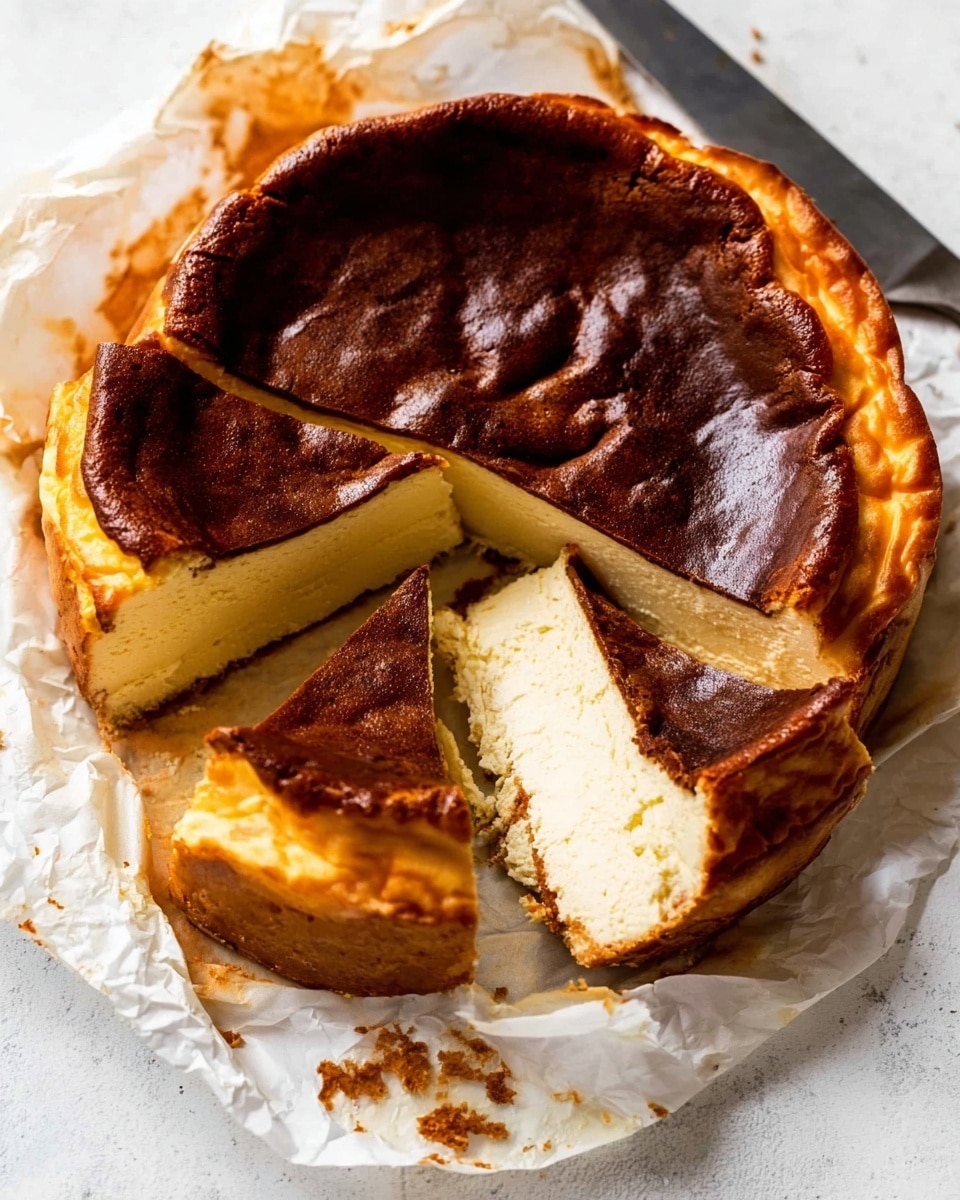
- Step 8: To serve, release the springform sides and use the parchment paper overhang to lift the cheesecake onto a plate. Fold down the paper edges. Serve at room temperature or chilled, cut like a regular cake. No toppings needed.
Tips & Variations
- Use room temperature eggs and cream cheese to ensure a smooth batter without lumps.
- Scrunched parchment paper creates the signature rustic edges and prevents sticking.
- Don’t overbeat the eggs into the batter to minimize air bubbles and cracks on the surface.
- If you prefer a less browned top, reduce baking time accordingly but expect a lighter crust.
Storage
Store the cheesecake in the refrigerator, uncovered or lightly covered, for up to 3-4 days. It tastes great chilled but can be brought to room temperature before serving for a creamier texture. Reheat gently if desired, but avoid microwaving to preserve the texture.
How to Serve
Serve this delicious recipe with your favorite sides.
FAQs
Can I use regular sugar instead of caster sugar?
Yes, regular white sugar works fine, though caster sugar dissolves more easily and gives a smoother texture.
Why does the cheesecake sink in the middle?
It’s normal for Basque cheesecake to sink and crack slightly as it cools due to its custardy texture. This sinking happens because the center is still soft when taken out of the oven.
Print
Basque Cheesecake Recipe
- Total Time: 10 hours 15 minutes (including chilling)
- Yield: 8 servings 1x
Description
This Basque Cheesecake is a rich and creamy dessert with a signature burnt golden top and rustic edges, made with cream cheese, whipping cream, sugar, eggs, and a touch of vanilla. Its custard-like texture and caramelized exterior make it a delightful treat that requires minimal ingredients and simple preparation, perfect for those who love a smooth, slightly tangy cheesecake with a unique twist.
Ingredients
Cheesecake Batter
- 750 g (1.5 lb) cream cheese blocks, room temperature (Philadelphia recommended)
- 1 cup caster/superfine sugar (or regular white sugar)
- 1 1/4 cups whipping cream, room temperature (take out of fridge 15 minutes prior)
- 1/4 cup plain/all-purpose flour
- 1 tsp vanilla bean extract or paste
- 3/4 cup + 1 tbsp lightly whisked eggs (about 4–5 large eggs, room temperature)
Pan Preparation
- 2 sheets of 40cm/16″ baking/parchment paper scrunched and folded to fit a 20cm/8″ springform pan
Instructions
- Preheat Oven: Preheat your oven to 220°C/425°F (200°C fan) and position the oven rack in the middle.
- Prepare Pan: Take two sheets of baking or parchment paper, each about 40cm/16″ long, scrunch them up, and press them into a 20cm/8″ springform pan. Fold the paper over the rim and scrunch or pleat it so it fits snugly, creating the cheesecake’s signature rustic sides.
- Beat Cream Cheese: In a large bowl, beat the cream cheese on medium speed for 2 minutes until smooth and lump-free. Scrape down the sides as necessary.
- Add Sugar: Add the sugar and beat on low speed for 10 seconds to combine without overmixing.
- Prepare Flour and Cream Mixture: In a separate bowl, whisk together 1/4 cup of the cream and all of the flour until smooth and paste-like. Gradually whisk in the remaining cream and the vanilla bean extract. The mixture should be pourable, not whipped.
- Combine Cream Mixture and Cream Cheese: With the mixer on low speed, slowly pour the cream mixture into the cream cheese bowl. Beat just to combine.
- Add Eggs: Slowly pour in the lightly whisked eggs while continuing to beat on low speed. Stop mixing as soon as the eggs are incorporated to avoid creating bubbles in the batter.
- Remove Air Bubbles: Pour the batter into the prepared pan. Bang the pan gently on the counter several times to release air bubbles, then pop any surface bubbles with a sharp knife, repeating 3-5 times.
- Bake: Bake for about 45 minutes until the top is a deep golden brown. It can take up to 65 minutes depending on your oven. The surface should be deeply caramelized while the center remains slightly wobbly.
- Cool and Chill: Let the cake cool in the pan on the counter for 2 hours; it will shrink slightly, which is normal. Then refrigerate uncovered for a minimum of 8 hours or overnight to set.
- Serve: Release the sides of the springform pan. Use the paper overhang to lift the cheesecake onto a serving plate. Fold down the paper sides for presentation. Serve at room temperature or chilled. No toppings needed; enjoy as is.
Notes
- Note 1: Using room temperature cream cheese ensures a smoother batter without lumps.
- Note 2: Allow whipping cream to come to room temperature for better incorporation into batter.
- Note 3: Precisely measure eggs by lightly whisking and measuring volume for consistent texture.
- Note 4: Scrunched parchment paper creates the cheesecake’s signature rustic sides and prevents sticking.
- Note 6: Mixing flour with a small portion of cream first avoids lumps in the batter.
- Note 7: Minimizing beating after adding eggs prevents bubbles which can cause cracks.
- Note 8: Baking time varies by oven; watch closely after 45 minutes to achieve a deep golden top without burning.
- Prep Time: 15 minutes
- Cook Time: 45-65 minutes
- Category: Dessert
- Method: Baking
- Cuisine: Basque / Spanish
Keywords: Basque cheesecake, burnt cheesecake, creamy cheesecake, Spanish dessert, baked cheesecake, rustic cheesecake